About
SONS of LIBERTY Radio with Bradlee Dean
What Is Happening? You Know!
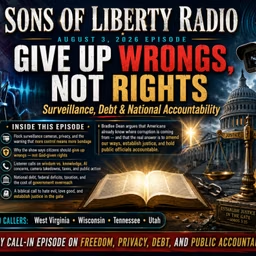
Give Up Wrongs, Not Rights: Surveillance, Debt, and National Accountability
Summary
A Call to Amend the Nation's Ways
The episode opens with a prerecorded commentary that frames abortion, media narratives, identity-based political movements, immigration, and government power through a Christian biblical worldview. After the program disclaimer, Bradlee Dean argues that Americans already recognize political corruption and do not need endless exposure to the same scandals. His central message is that citizens must "amend their ways," condemn wrongdoing, justify the innocent, and establish justice within the nation's gates. Drawing on Jeremiah, Leviticus, Amos, and other biblical references, he presents repentance and lawful accountability as the remedy for national decline.
Give Up Wrongs, Not Rights
Dean's principal policy discussion concerns Flock automated surveillance cameras and the authority of public officials to install or finance them. He argues that representatives possess only delegated authority and that undisclosed arrangements with corporations should lead to impeachment, prosecution, or other legal accountability. He rejects the idea that citizens must surrender rights to obtain public safety, warning that lost privacy destroys freedom and lost trust destroys dignity. His repeated formulation is that society should give up wrongs rather than God-given rights.
Listeners Bring Encouragement and Questions
Ken from West Virginia calls to praise the program as a community service rather than entertainment, comparing its value to Dave Krieger's work. Bev from Wisconsin then asks about the distinction between knowledge and wisdom, prompting Dean to define wisdom as possessing knowledge and knowing how to use it, with understanding also playing a role. Bev attempts to raise concerns about artificial intelligence, data storage, and information, but a failing telephone connection obscures most of her argument. The host pauses the conversation and invites her to call back from a location with a stronger signal.
A Tennessee Dispute Over Flock Cameras
Jeff from Tennessee describes a local political candidate who allegedly shot and disabled several Flock cameras and consequently faced felony charges. Dean and Jeff contrast the government's response to damaged surveillance equipment with what they view as weak enforcement against official wrongdoing. Jeff claims each camera carries a $4,000 annual subscription paid with tax dollars and urges citizens to pressure commissioners and representatives to stop funding the system. Their exchange broadens into a debate about taxation, delegated authority, political theater, and whether highly visible officeholders are genuine defenders of liberty.
Debt, Taxation, and Public Responsibility
The conversation moves from surveillance financing to national debt, state and local taxes, and the power of government to impose obligations without direct public approval. Dean and Jeff discuss balanced budgets, Social Security funds, accumulated federal debt, and the host's assertion that early administrations were expected to eliminate debt before leaving office. Dean invokes the Cloward-Piven concept and an Ethan Allen quotation while arguing that unsustainable spending and political inaction make citizens accomplices when they fail to demand judgment against wrongdoing. He returns to his biblical refrain that the public must amend its ways and establish justice.
Trump, Abortion, and Rejection of the Uniparty
In the final segment, Dean asks Siri about the projected fiscal year 2026 federal budget deficit and then challenges the figures while criticizing Donald Trump's debt record, media image, vaccine claims, and political following. A caller from Utah adds allegations concerning abortion totals and borrowing during Trump's presidencies. Dean responds by citing an article he has opened and claims that Trump increased funding connected to Planned Parenthood beyond the amount attributed to Barack Obama. He closes by stressing that his allegiance is to law rather than either major political party and by urging listeners to judge political figures by their actions rather than their words.
What Is Happening? You Know!
Give Up Wrongs, Not Rights: Surveillance, Debt, and National Accountability
Summary
A Call to Amend the Nation's Ways
The episode opens with a prerecorded commentary that frames abortion, media narratives, identity-based political movements, immigration, and government power through a Christian biblical worldview. After the program disclaimer, Bradlee Dean argues that Americans already recognize political corruption and do not need endless exposure to the same scandals. His central message is that citizens must "amend their ways," condemn wrongdoing, justify the innocent, and establish justice within the nation's gates. Drawing on Jeremiah, Leviticus, Amos, and other biblical references, he presents repentance and lawful accountability as the remedy for national decline.
Give Up Wrongs, Not Rights
Dean's principal policy discussion concerns Flock automated surveillance cameras and the authority of public officials to install or finance them. He argues that representatives possess only delegated authority and that undisclosed arrangements with corporations should lead to impeachment, prosecution, or other legal accountability. He rejects the idea that citizens must surrender rights to obtain public safety, warning that lost privacy destroys freedom and lost trust destroys dignity. His repeated formulation is that society should give up wrongs rather than God-given rights.
Listeners Bring Encouragement and Questions
Ken from West Virginia calls to praise the program as a community service rather than entertainment, comparing its value to Dave Krieger's work. Bev from Wisconsin then asks about the distinction between knowledge and wisdom, prompting Dean to define wisdom as possessing knowledge and knowing how to use it, with understanding also playing a role. Bev attempts to raise concerns about artificial intelligence, data storage, and information, but a failing telephone connection obscures most of her argument. The host pauses the conversation and invites her to call back from a location with a stronger signal.
A Tennessee Dispute Over Flock Cameras
Jeff from Tennessee describes a local political candidate who allegedly shot and disabled several Flock cameras and consequently faced felony charges. Dean and Jeff contrast the government's response to damaged surveillance equipment with what they view as weak enforcement against official wrongdoing. Jeff claims each camera carries a $4,000 annual subscription paid with tax dollars and urges citizens to pressure commissioners and representatives to stop funding the system. Their exchange broadens into a debate about taxation, delegated authority, political theater, and whether highly visible officeholders are genuine defenders of liberty.
Debt, Taxation, and Public Responsibility
The conversation moves from surveillance financing to national debt, state and local taxes, and the power of government to impose obligations without direct public approval. Dean and Jeff discuss balanced budgets, Social Security funds, accumulated federal debt, and the host's assertion that early administrations were expected to eliminate debt before leaving office. Dean invokes the Cloward-Piven concept and an Ethan Allen quotation while arguing that unsustainable spending and political inaction make citizens accomplices when they fail to demand judgment against wrongdoing. He returns to his biblical refrain that the public must amend its ways and establish justice.
Trump, Abortion, and Rejection of the Uniparty
In the final segment, Dean asks Siri about the projected fiscal year 2026 federal budget deficit and then challenges the figures while criticizing Donald Trump's debt record, media image, vaccine claims, and political following. A caller from Utah adds allegations concerning abortion totals and borrowing during Trump's presidencies. Dean responds by citing an article he has opened and claims that Trump increased funding connected to Planned Parenthood beyond the amount attributed to Barack Obama. He closes by stressing that his allegiance is to law rather than either major political party and by urging listeners to judge political figures by their actions rather than their words.