About
SONS of LIBERTY Radio with Bradlee Dean
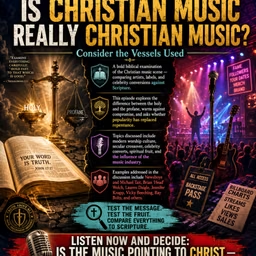
Is Christian Music Really Christian Music? Consider The Vessels Used
Christian Music Under Biblical Scrutiny: Artists, Labels, and the Test of Scripture
Summary
Testing Christian Music by Scripture
The episode centers on the host's argument that music marketed as Christian should be evaluated by biblical doctrine, personal conduct, and evidence of repentance rather than by celebrity status, popularity, or record-label branding. He connects the discussion to the prior day's program, using biblical accounts such as Nadab and Abihu's "strange fire" and the golden calf in Exodus as examples of worship he considers corrupted by human preference. He repeatedly urges listeners to distinguish between what he describes as holy and profane and to use Scripture as the standard. The host also draws on his own experience touring in rock music and later performing in a Christian band. From that experience, he claims that many performers used the Christian music market as a stepping stone toward secular success. His central theme is that a Christian label or profession does not, by itself, demonstrate Christian conversion.
Celebrity Conversions and the Question of Fruit
Early in the episode, the host discusses celebrity figures who have publicly associated themselves with Christianity, including Kanye West, Bono, Brian "Head" Welch, Alice Cooper, and Bob Dylan. He criticizes what he sees as pride, inconsistency, or a return to former lifestyles, and contrasts those examples with biblical passages about humility, repentance, and becoming a new creature. The host argues that listeners should "prove" or test those who present themselves as Christians rather than treating famous entertainers as spiritual authorities. He repeatedly characterizes the modern gospel as producing shallow or "mushroom" converts when it emphasizes comforting messages without repentance. His remarks are framed as his own theological judgments and interpretations of Scripture. The episode's broader warning is that admiration for a performer can become a form of idolatry when celebrity takes precedence over biblical standards.
The Christian Music Industry and Michael Tait
A major portion of the program focuses on Michael Tait and the Newsboys. The host discusses allegations of sexual misconduct, grooming, cocaine use, and other behavior attributed to Tait, and he argues that people within bands, management, and record labels would have been aware of serious problems. He presents this as an example of what he believes is a deeper failure within the Christian music industry, where performers can be promoted as models of faith while their private conduct contradicts the message being sold to audiences. The host also argues that many Christian bands imitate secular artists musically and culturally, which he regards as using worldly methods to reach people for Christ. He contrasts that approach with a gospel message centered on repentance, suffering, Christ's crucifixion, and demonstrated love. These are claims and conclusions made by the host in the episode, not independent findings established by the transcript.
Conversion, Conduct, and Other Christian Artists
The host later returns to Brian "Head" Welch and then names other artists, including Jennifer Knapp, Vicky Beeching, Marsha Stevens, Ray Boltz, and a person transcribed as Dan Hazelton. He uses their public identities, relationships, or statements as examples in his argument that Christian profession must be tested by conduct and doctrine. The host's language is strongly condemnatory, especially when discussing homosexuality, and he repeatedly cites biblical passages that he believes establish moral boundaries. He also criticizes Christian audiences for accepting artists without knowing Scripture for themselves. Throughout this segment, his emphasis remains that believers should evaluate teaching and behavior against the Bible rather than follow performers because of emotional music, popularity, or reputation. The transcript preserves these controversial views as statements made by the speaker rather than presenting them as neutral facts.
Lauren Daigle, Biblical Knowledge, and Moral Questions
In the final host segment, the discussion turns to Lauren Daigle and a past interview in which, according to the host, she did not give a definitive biblical answer when asked whether homosexuality is a sin. He treats that response as evidence that a prominent Christian singer should know Scripture more thoroughly before representing Christian teaching publicly. The host then expands the point into a broader criticism of Christians who cannot identify basic commandments or define sin in the way he believes Scripture defines it. He cites passages from Ezekiel, John, 1 John, Matthew, Romans, Leviticus, and other books while contrasting biblical law with what he describes as modern religious and cultural compromise. He compares the pattern to voters repeatedly trusting politicians who fail to uphold their promises or governing principles. The segment closes with his insistence that music and entertainment shape people's thinking and therefore deserve serious spiritual scrutiny.
Promotions, Ministry Appeals, and the Continuing Series
Between the main discussion segments, the recording contains several recurring promotional and ministry announcements, all of which are preserved in the corrected transcript. These include Sons of Liberty donation requests, invitations to a Sunday church broadcast, Minnesota State Fair information, Wisconsin Christian News, a Christian Media Conference promotion, an event-booking announcement, a Liberty Sentinel promo voiced by Alex Newman, and a BBS Radio network identification. Testimonial segments from Tom Raimund and Lisa Mead praise the ministry and its biblical teaching, while historical quotation segments connect faith, liberty, and American government. The host also repeatedly gives the call-in number and website addresses and attempts unsuccessfully to connect a caller named Margie. Near the end, he says the discussion will continue into the next program and will eventually move from Christian music into secular music. He closes by saying that his purpose is to give listeners what he believes is the truth and to warn them about the spiritual influence of the music they consume.
Is Christian Music Really Christian Music? Consider The Vessels Used
Christian Music Under Biblical Scrutiny: Artists, Labels, and the Test of Scripture
Summary
Testing Christian Music by Scripture
The episode centers on the host's argument that music marketed as Christian should be evaluated by biblical doctrine, personal conduct, and evidence of repentance rather than by celebrity status, popularity, or record-label branding. He connects the discussion to the prior day's program, using biblical accounts such as Nadab and Abihu's "strange fire" and the golden calf in Exodus as examples of worship he considers corrupted by human preference. He repeatedly urges listeners to distinguish between what he describes as holy and profane and to use Scripture as the standard. The host also draws on his own experience touring in rock music and later performing in a Christian band. From that experience, he claims that many performers used the Christian music market as a stepping stone toward secular success. His central theme is that a Christian label or profession does not, by itself, demonstrate Christian conversion.
Celebrity Conversions and the Question of Fruit
Early in the episode, the host discusses celebrity figures who have publicly associated themselves with Christianity, including Kanye West, Bono, Brian "Head" Welch, Alice Cooper, and Bob Dylan. He criticizes what he sees as pride, inconsistency, or a return to former lifestyles, and contrasts those examples with biblical passages about humility, repentance, and becoming a new creature. The host argues that listeners should "prove" or test those who present themselves as Christians rather than treating famous entertainers as spiritual authorities. He repeatedly characterizes the modern gospel as producing shallow or "mushroom" converts when it emphasizes comforting messages without repentance. His remarks are framed as his own theological judgments and interpretations of Scripture. The episode's broader warning is that admiration for a performer can become a form of idolatry when celebrity takes precedence over biblical standards.
The Christian Music Industry and Michael Tait
A major portion of the program focuses on Michael Tait and the Newsboys. The host discusses allegations of sexual misconduct, grooming, cocaine use, and other behavior attributed to Tait, and he argues that people within bands, management, and record labels would have been aware of serious problems. He presents this as an example of what he believes is a deeper failure within the Christian music industry, where performers can be promoted as models of faith while their private conduct contradicts the message being sold to audiences. The host also argues that many Christian bands imitate secular artists musically and culturally, which he regards as using worldly methods to reach people for Christ. He contrasts that approach with a gospel message centered on repentance, suffering, Christ's crucifixion, and demonstrated love. These are claims and conclusions made by the host in the episode, not independent findings established by the transcript.
Conversion, Conduct, and Other Christian Artists
The host later returns to Brian "Head" Welch and then names other artists, including Jennifer Knapp, Vicky Beeching, Marsha Stevens, Ray Boltz, and a person transcribed as Dan Hazelton. He uses their public identities, relationships, or statements as examples in his argument that Christian profession must be tested by conduct and doctrine. The host's language is strongly condemnatory, especially when discussing homosexuality, and he repeatedly cites biblical passages that he believes establish moral boundaries. He also criticizes Christian audiences for accepting artists without knowing Scripture for themselves. Throughout this segment, his emphasis remains that believers should evaluate teaching and behavior against the Bible rather than follow performers because of emotional music, popularity, or reputation. The transcript preserves these controversial views as statements made by the speaker rather than presenting them as neutral facts.
Lauren Daigle, Biblical Knowledge, and Moral Questions
In the final host segment, the discussion turns to Lauren Daigle and a past interview in which, according to the host, she did not give a definitive biblical answer when asked whether homosexuality is a sin. He treats that response as evidence that a prominent Christian singer should know Scripture more thoroughly before representing Christian teaching publicly. The host then expands the point into a broader criticism of Christians who cannot identify basic commandments or define sin in the way he believes Scripture defines it. He cites passages from Ezekiel, John, 1 John, Matthew, Romans, Leviticus, and other books while contrasting biblical law with what he describes as modern religious and cultural compromise. He compares the pattern to voters repeatedly trusting politicians who fail to uphold their promises or governing principles. The segment closes with his insistence that music and entertainment shape people's thinking and therefore deserve serious spiritual scrutiny.
Promotions, Ministry Appeals, and the Continuing Series
Between the main discussion segments, the recording contains several recurring promotional and ministry announcements, all of which are preserved in the corrected transcript. These include Sons of Liberty donation requests, invitations to a Sunday church broadcast, Minnesota State Fair information, Wisconsin Christian News, a Christian Media Conference promotion, an event-booking announcement, a Liberty Sentinel promo voiced by Alex Newman, and a BBS Radio network identification. Testimonial segments from Tom Raimund and Lisa Mead praise the ministry and its biblical teaching, while historical quotation segments connect faith, liberty, and American government. The host also repeatedly gives the call-in number and website addresses and attempts unsuccessfully to connect a caller named Margie. Near the end, he says the discussion will continue into the next program and will eventually move from Christian music into secular music. He closes by saying that his purpose is to give listeners what he believes is the truth and to warn them about the spiritual influence of the music they consume.