About
SONS of LIBERTY Radio with Bradlee Dean
Self-Inflicted Hate Has Consequences, People
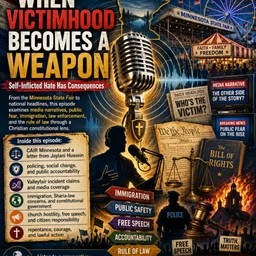
When Victimhood Becomes a Weapon: Media Narratives, Immigration, and the Rule of Law
Summary
Minnesota State Fair, Public Fear, and Personal Responsibility
Bradley Dean opens from the Minnesota State Fair and contrasts what he says he personally sees there with broader media narratives about Muslims and Somali gangs in Minnesota. He argues that the state's much larger non-Muslim population should not portray itself as powerless in the face of a comparatively smaller group. He repeatedly places responsibility on citizens, churches, public officials and law enforcement to act according to his understanding of constitutional law and biblical duty. He also discusses the placement of the show's booth near a Black Lives Matter booth and says he views that proximity as an opportunity to reach people directly. Throughout these remarks, he criticizes fear-based reporting and says the public should distinguish between actual criminal conduct and exaggerated impressions of how widespread a threat is. His State Fair location and outreach efforts return again in the closing appeal, where he invites listeners to visit the booth and support the ministry.
Self-Inflicted Hate Claims and the Victim-versus-Aggressor Theme
A central theme of the episode is Dean's contention that some political and identity-based movements portray themselves as victims while, in his view, attacking opponents or institutions. He describes what he calls self-inflicted hate crimes and applies that framework to both LGBTQ activists and Muslims, presenting the claim as part of his broader argument about political manipulation. He also cites a CAIR Minnesota letter attributed to Jaylani Hussein, focusing on language about changing policing, values and social structures. Dean interprets that letter as evidence of an effort to undermine existing law and institutions, while the transcript itself does not independently establish those conclusions. He later links the same victim-versus-aggressor theme to immigration, asylum, church hostility and criminal incidents he discusses on air. The episode repeatedly returns to his call for consequences, enforcement of law and public resistance to narratives he believes reverse the roles of offender and victim.
Islam, Immigration, Sharia, and Played Commentary
Much of the program centers on Dean's strongly critical views of Islam, Muslim immigration and Sharia law, with several prerecorded or played clips used to reinforce those arguments. He reads or paraphrases historical statements attributed to John Wesley and Winston Churchill and presents modern incidents in Europe, Minnesota, Texas and Virginia as examples of a larger pattern. A played higher-education clip alleges long-term Muslim Brotherhood influence in American universities and discusses the training of imams in Texas. Another played clip, attributed in the transcript to retired U.S. Army chaplain Edward R. Bassett, describes Islam as a political and totalitarian ideology and argues that immigration without assimilation amounts to invasion. Later clips discuss proposals concerning Sharia, immigration vetting and CAIR's tax status. These claims and descriptions are preserved as statements made by the speakers and clips in the episode; the transcript does not independently verify them.
Media, Political Provocateurs, and Competing Narratives
Dean repeatedly accuses mainstream media outlets, political actors and online influencers of manipulating public perception. He says Minnesota media minimized or removed coverage of a Valleyfair disturbance that he describes as involving a large Somali group and an extensive police response. He also alleges that prominent figures such as Jake Lang and other social-media personalities function as paid provocateurs, and he plays a short clip making an accusation about Lang. Dean expands that argument into a broader claim that political factions and Zionist interests are attempting to create conflict between Christians and Muslims. A separate street-interview montage repeatedly asks public officials whether they put America or Israel first, which Dean uses to criticize elected representatives and AIPAC influence. Across these segments, the episode presents media coverage, political theater and manufactured opposition as interconnected mechanisms that Dean believes keep citizens divided and distracted.
Constitutional Government, Representatives, and Enforcement of Law
Dean frames his political argument around the idea that Americans are the government and elected officials are representatives exercising delegated authority rather than leaders in their own right. He repeatedly criticizes officials for talking about alleged wrongdoing without enforcing laws or producing consequences. He invokes the Constitution, the Declaration of Independence, the Bill of Rights, state preambles, public oaths and multiple biblical passages as the standards by which he says government action should be judged. During a played congressional segment about a Sharia-Free America Caucus, Dean interrupts to argue that special caucuses and modern party structures have no constitutional standing. He also disputes the notion that liberty means people may do anything they wish, instead emphasizing that liberty is bounded by law and judgment. His recurring conclusion is that constitutional government cannot survive without lawful enforcement, citizen involvement and accountability for representatives.
Christian Worldview, Ministry Appeals, and Closing Call to Action
The episode is explicitly framed by a prerecorded disclaimer stating that the program operates from a Christian biblical worldview. Dean repeatedly connects political conditions to biblical judgment, repentance, the teachings of Jesus Christ and passages from Deuteronomy, Jeremiah, Psalms, Proverbs and other books of Scripture. Commercial and promotional breaks include invitations to a Christian media conference, church services, Liberty Sentinel, public events and financial support for the ministry, along with listener testimonials. Dean also records a BBS Radio TV promotional segment describing the network's reach, production history and syndication. Near the end, he criticizes both conservative and liberal propaganda, urges listeners to verify claims before repeating them, and says the country has representatives rather than political leaders because Christ is the ultimate leader in his worldview. He closes by returning to the Minnesota State Fair, asking listeners to support the ministry and emphasizing that he believes lawful answers and collective action can still produce victory.
Self-Inflicted Hate Has Consequences, People
When Victimhood Becomes a Weapon: Media Narratives, Immigration, and the Rule of Law
Summary
Minnesota State Fair, Public Fear, and Personal Responsibility
Bradley Dean opens from the Minnesota State Fair and contrasts what he says he personally sees there with broader media narratives about Muslims and Somali gangs in Minnesota. He argues that the state's much larger non-Muslim population should not portray itself as powerless in the face of a comparatively smaller group. He repeatedly places responsibility on citizens, churches, public officials and law enforcement to act according to his understanding of constitutional law and biblical duty. He also discusses the placement of the show's booth near a Black Lives Matter booth and says he views that proximity as an opportunity to reach people directly. Throughout these remarks, he criticizes fear-based reporting and says the public should distinguish between actual criminal conduct and exaggerated impressions of how widespread a threat is. His State Fair location and outreach efforts return again in the closing appeal, where he invites listeners to visit the booth and support the ministry.
Self-Inflicted Hate Claims and the Victim-versus-Aggressor Theme
A central theme of the episode is Dean's contention that some political and identity-based movements portray themselves as victims while, in his view, attacking opponents or institutions. He describes what he calls self-inflicted hate crimes and applies that framework to both LGBTQ activists and Muslims, presenting the claim as part of his broader argument about political manipulation. He also cites a CAIR Minnesota letter attributed to Jaylani Hussein, focusing on language about changing policing, values and social structures. Dean interprets that letter as evidence of an effort to undermine existing law and institutions, while the transcript itself does not independently establish those conclusions. He later links the same victim-versus-aggressor theme to immigration, asylum, church hostility and criminal incidents he discusses on air. The episode repeatedly returns to his call for consequences, enforcement of law and public resistance to narratives he believes reverse the roles of offender and victim.
Islam, Immigration, Sharia, and Played Commentary
Much of the program centers on Dean's strongly critical views of Islam, Muslim immigration and Sharia law, with several prerecorded or played clips used to reinforce those arguments. He reads or paraphrases historical statements attributed to John Wesley and Winston Churchill and presents modern incidents in Europe, Minnesota, Texas and Virginia as examples of a larger pattern. A played higher-education clip alleges long-term Muslim Brotherhood influence in American universities and discusses the training of imams in Texas. Another played clip, attributed in the transcript to retired U.S. Army chaplain Edward R. Bassett, describes Islam as a political and totalitarian ideology and argues that immigration without assimilation amounts to invasion. Later clips discuss proposals concerning Sharia, immigration vetting and CAIR's tax status. These claims and descriptions are preserved as statements made by the speakers and clips in the episode; the transcript does not independently verify them.
Media, Political Provocateurs, and Competing Narratives
Dean repeatedly accuses mainstream media outlets, political actors and online influencers of manipulating public perception. He says Minnesota media minimized or removed coverage of a Valleyfair disturbance that he describes as involving a large Somali group and an extensive police response. He also alleges that prominent figures such as Jake Lang and other social-media personalities function as paid provocateurs, and he plays a short clip making an accusation about Lang. Dean expands that argument into a broader claim that political factions and Zionist interests are attempting to create conflict between Christians and Muslims. A separate street-interview montage repeatedly asks public officials whether they put America or Israel first, which Dean uses to criticize elected representatives and AIPAC influence. Across these segments, the episode presents media coverage, political theater and manufactured opposition as interconnected mechanisms that Dean believes keep citizens divided and distracted.
Constitutional Government, Representatives, and Enforcement of Law
Dean frames his political argument around the idea that Americans are the government and elected officials are representatives exercising delegated authority rather than leaders in their own right. He repeatedly criticizes officials for talking about alleged wrongdoing without enforcing laws or producing consequences. He invokes the Constitution, the Declaration of Independence, the Bill of Rights, state preambles, public oaths and multiple biblical passages as the standards by which he says government action should be judged. During a played congressional segment about a Sharia-Free America Caucus, Dean interrupts to argue that special caucuses and modern party structures have no constitutional standing. He also disputes the notion that liberty means people may do anything they wish, instead emphasizing that liberty is bounded by law and judgment. His recurring conclusion is that constitutional government cannot survive without lawful enforcement, citizen involvement and accountability for representatives.
Christian Worldview, Ministry Appeals, and Closing Call to Action
The episode is explicitly framed by a prerecorded disclaimer stating that the program operates from a Christian biblical worldview. Dean repeatedly connects political conditions to biblical judgment, repentance, the teachings of Jesus Christ and passages from Deuteronomy, Jeremiah, Psalms, Proverbs and other books of Scripture. Commercial and promotional breaks include invitations to a Christian media conference, church services, Liberty Sentinel, public events and financial support for the ministry, along with listener testimonials. Dean also records a BBS Radio TV promotional segment describing the network's reach, production history and syndication. Near the end, he criticizes both conservative and liberal propaganda, urges listeners to verify claims before repeating them, and says the country has representatives rather than political leaders because Christ is the ultimate leader in his worldview. He closes by returning to the Minnesota State Fair, asking listeners to support the ministry and emphasizing that he believes lawful answers and collective action can still produce victory.