About
Junk Refund Show with Alan J. Cook
From Scrap Metal to Cross-Country Flights: Turning Junk Into Opportunity and Taking Action
Summary
Turning Junk Into Value
Alan J. Cook opens the episode by describing the business model behind 1-800-JUNK-REFUND and the idea that not everything removed from a home should automatically be treated as trash. He explains that the company charges for junk removal while also identifying items that may be worth selling, with proceeds potentially returned to the customer. He describes hidden valuables that can turn up during cleanouts, including money, jewelry, collectibles, and other unexpected finds. He also explains a three-part marketing approach built around lower pricing, Ben & Jerry’s gift cards, and the promise to sell worthwhile items rather than discard them. The larger theme is that a junk-removal business can create value by looking more carefully at what other people are ready to throw away.
Scrap Metal, Copper, and Customer Growth
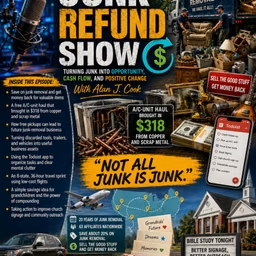
The host then describes how free scrap-metal pickups can become both a revenue stream and a source of future junk-removal customers. He discusses the high value of copper compared with ordinary scrap metal and recounts picking up two discarded air-conditioning units after being selected from roughly 100 interested respondents on Facebook Marketplace. The load later brought in $318 at a scrap yard, illustrating why the company is willing to collect certain metal items for free. He also tells the story of a customer named Dave, who first encountered the company through a free scrap pickup and later used a 20% discount card on a much larger moving-related junk-removal job. The segment presents free pickups as a practical way to build trust, create leads, and turn discarded material into usable business value.
Saving for Grandchildren and Organizing the Day
Cook connects his scrap-metal cash to a personal savings habit by describing two envelopes he maintains for his young granddaughters. He says he puts $5 a day into each child’s savings and discusses how consistent contributions over many years could grow substantially through compounding. He presents the practice as another way of reducing future financial stress by starting early and putting time to work. He then shifts to personal productivity, recalling his years with FranklinCovey and describing how he now uses the Todoist app instead of a paper day planner. For him, moving tasks out of his head and into a simple prioritized list helps clear mental clutter and gives him a concrete way to get things done.
Eight States in Thirty-Six Hours
A major portion of the episode follows Cook’s unusually fast and inexpensive cross-country trip. He describes driving to Philadelphia, flying through Denver to Utah, spending time with family, visiting an aquarium, checking on friends dealing with a serious health crisis, stopping at the BYU Creamery, and attending his son-in-law’s Education Week presentation about spiritual lessons from The Lord of the Rings. From Utah he continues through Phoenix and Los Angeles, visits a temple, then takes a $16 Frontier Airlines flight to Orlando before working his way through Charlotte and back to Philadelphia. He says the journey put him in eight states in about 36 hours and uses the experience to contrast modern mobility with the much slower travel of the 1800s. The trip becomes an example of his broader belief that modern life offers extraordinary opportunities when people are willing to search for unconventional options.
Reusing Equipment Instead of Buying It
Back in the junk-removal business, Cook describes another form of reuse: turning discarded equipment into operating assets. He talks about SUVs, a rear cargo carrier, tools, and a four-by-eight-foot trailer that were acquired through hauling jobs rather than purchased in the usual way. The trailer needs rust removal, paint, sides, and a fold-down back, but he sees it as a future money-making tool for smaller jobs. He also recounts dismantling an air-conditioning unit with tools that had themselves been discarded, recovering copper and other valuable material for scrap. His enthusiasm comes from the circular nature of the process: customers pay to have things removed, and some of those same things can then reduce his company’s costs or create additional income.
Speaking Up and Trying to Make Change
The final segment moves from physical junk to the idea of clearing frustration from one’s life by taking action. Cook discusses his church involvement and his belief that signage at a Washington, D.C., church building should face oncoming traffic and eventually be replaced by an electronic sign capable of displaying changing messages and multiple languages. He says temporary A-frame signs promoting a Wednesday Bible study have helped draw people to the class, strengthening his belief that better visibility could have a wider impact. After years of thinking about the issue and discussing it with local leaders, he says he prepared a documented letter with photos and sent copies by FedEx to senior church leaders in Salt Lake City. Whether or not the proposal is accepted, he says the act of making the case gave him peace of mind because he had done what he could rather than silently wishing for change.
From Scrap Metal to Cross-Country Flights: Turning Junk Into Opportunity and Taking Action
Summary
Turning Junk Into Value
Alan J. Cook opens the episode by describing the business model behind 1-800-JUNK-REFUND and the idea that not everything removed from a home should automatically be treated as trash. He explains that the company charges for junk removal while also identifying items that may be worth selling, with proceeds potentially returned to the customer. He describes hidden valuables that can turn up during cleanouts, including money, jewelry, collectibles, and other unexpected finds. He also explains a three-part marketing approach built around lower pricing, Ben & Jerry’s gift cards, and the promise to sell worthwhile items rather than discard them. The larger theme is that a junk-removal business can create value by looking more carefully at what other people are ready to throw away.
Scrap Metal, Copper, and Customer Growth
The host then describes how free scrap-metal pickups can become both a revenue stream and a source of future junk-removal customers. He discusses the high value of copper compared with ordinary scrap metal and recounts picking up two discarded air-conditioning units after being selected from roughly 100 interested respondents on Facebook Marketplace. The load later brought in $318 at a scrap yard, illustrating why the company is willing to collect certain metal items for free. He also tells the story of a customer named Dave, who first encountered the company through a free scrap pickup and later used a 20% discount card on a much larger moving-related junk-removal job. The segment presents free pickups as a practical way to build trust, create leads, and turn discarded material into usable business value.
Saving for Grandchildren and Organizing the Day
Cook connects his scrap-metal cash to a personal savings habit by describing two envelopes he maintains for his young granddaughters. He says he puts $5 a day into each child’s savings and discusses how consistent contributions over many years could grow substantially through compounding. He presents the practice as another way of reducing future financial stress by starting early and putting time to work. He then shifts to personal productivity, recalling his years with FranklinCovey and describing how he now uses the Todoist app instead of a paper day planner. For him, moving tasks out of his head and into a simple prioritized list helps clear mental clutter and gives him a concrete way to get things done.
Eight States in Thirty-Six Hours
A major portion of the episode follows Cook’s unusually fast and inexpensive cross-country trip. He describes driving to Philadelphia, flying through Denver to Utah, spending time with family, visiting an aquarium, checking on friends dealing with a serious health crisis, stopping at the BYU Creamery, and attending his son-in-law’s Education Week presentation about spiritual lessons from The Lord of the Rings. From Utah he continues through Phoenix and Los Angeles, visits a temple, then takes a $16 Frontier Airlines flight to Orlando before working his way through Charlotte and back to Philadelphia. He says the journey put him in eight states in about 36 hours and uses the experience to contrast modern mobility with the much slower travel of the 1800s. The trip becomes an example of his broader belief that modern life offers extraordinary opportunities when people are willing to search for unconventional options.
Reusing Equipment Instead of Buying It
Back in the junk-removal business, Cook describes another form of reuse: turning discarded equipment into operating assets. He talks about SUVs, a rear cargo carrier, tools, and a four-by-eight-foot trailer that were acquired through hauling jobs rather than purchased in the usual way. The trailer needs rust removal, paint, sides, and a fold-down back, but he sees it as a future money-making tool for smaller jobs. He also recounts dismantling an air-conditioning unit with tools that had themselves been discarded, recovering copper and other valuable material for scrap. His enthusiasm comes from the circular nature of the process: customers pay to have things removed, and some of those same things can then reduce his company’s costs or create additional income.
Speaking Up and Trying to Make Change
The final segment moves from physical junk to the idea of clearing frustration from one’s life by taking action. Cook discusses his church involvement and his belief that signage at a Washington, D.C., church building should face oncoming traffic and eventually be replaced by an electronic sign capable of displaying changing messages and multiple languages. He says temporary A-frame signs promoting a Wednesday Bible study have helped draw people to the class, strengthening his belief that better visibility could have a wider impact. After years of thinking about the issue and discussing it with local leaders, he says he prepared a documented letter with photos and sent copies by FedEx to senior church leaders in Salt Lake City. Whether or not the proposal is accepted, he says the act of making the case gave him peace of mind because he had done what he could rather than silently wishing for change.