Artificial intelligence (AI) is often framed as a technological breakthrough. But behind the headlines is a deeper question: who owns the infrastructure shaping how we communicate, create, and understand truth?
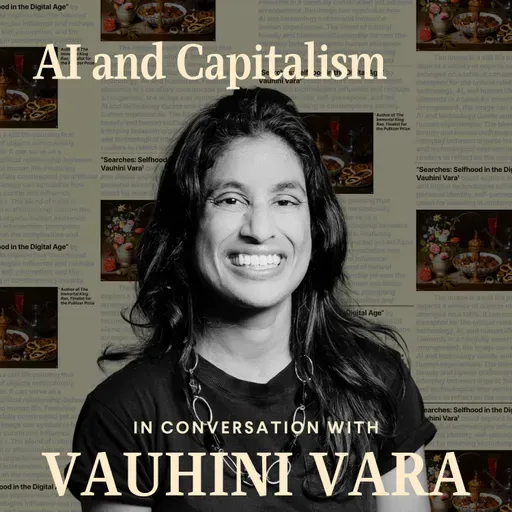
In this episode of Art of Citizenry Podcast, we slow down the AI conversation to ask harder questions – not just about what these systems can do, but who built them, who profits from them, and what we give up by using them. Manpreet Kalra is joined by Vauhini Vara, author of Searches: Selfhood in the Digital Age and longtime journalist covering Big Tech, to unpack the structural forces at play behind the AI boom.
Together, we explore how AI is less a neutral technology than a mirror of the economic and ideological forces that built it. A social system shaped by corporate incentives, embedded bias, and the quiet erosion of our ability to define truth for ourselves and what it means for all of us when the infrastructure shaping that truth is privately owned, profit-driven, and constantly learning from us.
This isn't a conversation with easy answers. It's about sitting with complexity, and the uncomfortable reality that opting out is rarely simple.
In this episode, we explore:
Why AI bias is more than a technical glitch and how it reflects deeper social and economic power structures.
The legal battles over AI training data, including The New York Times v. OpenAI and Bartz v. Anthropic
How AI systems can reinforce confirmation bias and shape our perception of truth
Why Big Tech’s incentives matter when the infrastructure of communication and tools shaping public knowledge are privately owned
The relationship between users and tech companies; and why exploitation and convenience can coexist
Alternative models for technology governance, from public infrastructure to nonprofit platforms
AI isn’t just a technical system. It’s a social and economic one. The outputs we see reflect the data they’re trained on, the incentives of the companies building them, and the broader political economy of the internet. If we want different outcomes from AI, the conversation must expand beyond engineering fixes to include questions of ownership, accountability, and power.
Vauhini Vara is the author of Searches: Selfhood in the Digital Age, named a best book of the year by Esquire, Slate, and Publisher’s Weekly and a winner of the Porchlight Business Book Award. Her previous books are This is Salvaged, which was longlisted for the Story Prize and won the High Plains Book Award, and The Immortal King Rao, a Pulitzer Prize finalist and winner of the Colorado Book Award. She is also a journalist, currently working as a contributing writer for Businessweek.
📌Support the Podcast: Art of Citizenry is proudly independent. Support us as we critically explore, challenge, and unravel mainstream narratives by empowering listeners with accessible, nuanced perspectives.
Contribute via Paypal: https://visit.artofcitizenry.com/paypal
Substack: https://artofcitizenry.substack.com
Follow the show on Instagram: https://www.instagram.com/artofcitizenry
Follow Manpreet on Instagram: https://instagram.com/manpreetkalra
Explore Past Episodes of the Art of Citizenry Podcast with Manpreet Kalra: https://www.artofcitizenry.com/podcast
For more, you can find the full show notes of every episode at https://www.artofcitizenry.com/episodes