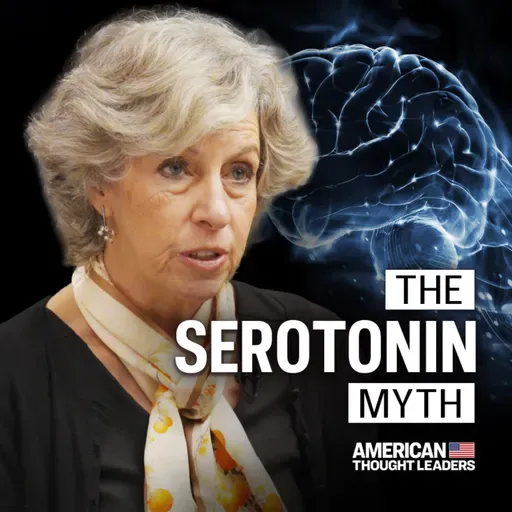
Dr. Joanna Moncrieff is a British psychiatrist and author of “Chemically Imbalanced: The Making and Unmaking of the Serotonin Myth.” She challenges the long-held belief that depression is caused by a lack of the hormone serotonin.
“The serotonin myth … was first put out there in the 1960s, then picked up by the pharmaceutical industry in the 1990s and widely propagated by them as part of their campaign to sell SSRIs, their new generation of antidepressants,” she said.
Contrary to what many people still believe, there’s no evidence that depression is caused by a lack of serotonin in the brain, Moncrieff said.
“A few years ago, we published what’s called an umbrella review, a sort of meta review of all the different areas of research that have looked at this. … And we show that there is no consistent or convincing evidence in any of these areas of research for any association between serotonin and depression. So hence, the idea is a myth,” she said.
In our interview, she explains how this narrative took hold and how it reshaped modern psychiatry.
So what causes depression if not a lack of serotonin? Dr. Moncrieff, who is a professor of critical and social psychiatry at University College London, regards depression as “meaningful human reactions to the circumstances of life now, and that is indeed how people used to think about them.”
It’s not a biological disease, she said, but a normal reaction that anyone may experience at times throughout life.
“It’s not something that we naturally just get over in a couple of weeks. It can take weeks and months of grieving, even for a short-term relationship that’s finished.”
To label deep sadness as a pathological medical condition that needs to be fixed with drugs is the wrong approach and precludes seeing a person “who is suffering, who is going through a period of difficulty and trying to work out what that is and how we can support them with it,” Moncrieff said.
Views expressed in this video are opinions of the host and the guest, and do not necessarily reflect the views of The Epoch Times.