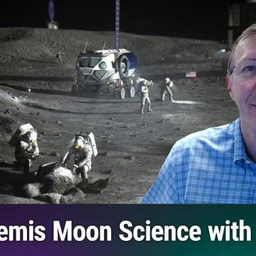
It has been said that the Moon is a harsh mistress, and nowhere is this more apparent than at the lunar south pole. That is, however, where the Artemis program is headed, and we need to figure out how to best explore the region. Dr. David Kring of the Universities Space Research Association's Lunar and Planetary Institute joins us to explore the where, whys, and hows of the Artemis Program's lunar exploration plans, and the answers--and risks--that await us.
Headlines:
Starship Flight 12 Survives Indian Ocean Landing nd Long Sea Journey
China's Chang'e 7 Lunar Hopper Mission Targets Permanently Shadowed Terrain
US National Space Transportation Policy Aims for 1,000 Launches Per Year by 2030
Main Topic: The Science and Planning of the Artemis Lunar Program
Criteria and Studies for Selecting Artemis Landing Sites
South Pole Resource Advantages: Continuous Solar Power and Potential Volatiles
Scientific Promise of the Schrödinger Impact Basin vs. South Pole Mandate
The Value of Lunar Sample Return for Transformational Science
Unique Terrain and Operational Challenges of the Lunar South Polar Region
Training, Mobility, and the Role of Human Exploration versus Robotics
Impact Cratering's Role in Life's Origins and Earth's Early History
Considerations for Lunar Base Location and Hazards
Training Programs for Scientists and Astronauts Preparing for Artemis
Host: Rod Pyle
Co-Host: Fredrick (Rick) Jenet
Guest: Dr. David Kring
Download or subscribe to This Week in Space at https://twit.tv/shows/this-week-in-space.
Join Club TWiT for Ad-Free Podcasts!
Support what you love and get ad-free audio and video feeds, a members-only Discord, and exclusive content. Join today: https://twit.tv/clubtwit