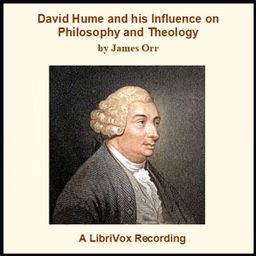
David Hume justly takes rank as the most distinguished member of that brilliant circle of literary men whose names gave such a lustre to the second half of the eighteenth century in Scotland. His speculations were the most profound, and, with the possible exception of Adam Smith in a particular department, his influence was the widest and most deeply felt, of any. But even his warmest friends could scarcely have predicted the influence he was destined to exercise, or the important results that were to spring from his thoughts. It required time to clear away the mists that had gathered round his name, and to place him in his true light in the eyes of posterity. At a century and a half’s distance, we are in a better position to take an impartial survey of his work and its effects. The result must be, that, however we may judge of Hume in particular respects, we cannot deny to him a right to the title of a great and independent thinker. It is indicated in the text that the point of view from which Hume’s philosophy is mainly regarded is that of an experiment to explain knowledge, and generally the intellectual and moral outfit of man, without the assumption of a rational nature in man. - Summary by Preface and Introduction
LibriVox recordings are public domain in the United States; copyright status may differ elsewhere.
Chapters
- Chapter 1
Introductory
19:21 - Chapter 2
Life of Hume 1. Till the Publication of the Treatise
38:10 - Chapter 3
Life of Hume 2. Literary Labours till the Publication of the History
39:28 - Chapter 4
Life of Hume 3. From the Publication of the History till his Death
55:24 - Chapter 5
Hume in Relation to Previous Philosophy - His Scepticism
30:16 - Chapter 6
Hume and the First Principles of Knowledge
27:07 - Chapter 7
Hume on Cause and Effect: Free Will
46:51 - Chapter 8
Hume on Substance: The Material World: the Ego
35:44 - Chapter 9
Hume on Morals: Utilitarianism
52:44 - Chapter 10
Hume and Theology: Miracles
48:07 - Chapter 11
Hume's Miscellaneous Writings: Political Economy - Hume as Historian
34:59